
Keller’s Investigation and Its Abandonment
The Book of MirrorsThis thread follows John Keller’s attempt to reconstruct Richard Flynn’s missing book, as each new source expands the investigation while making a settled explanation harder to defend.
increasing Bearing strength in each event
 decreasing
Bearing strength in each eventdecreasingA Missing Manuscript Becomes a Commission
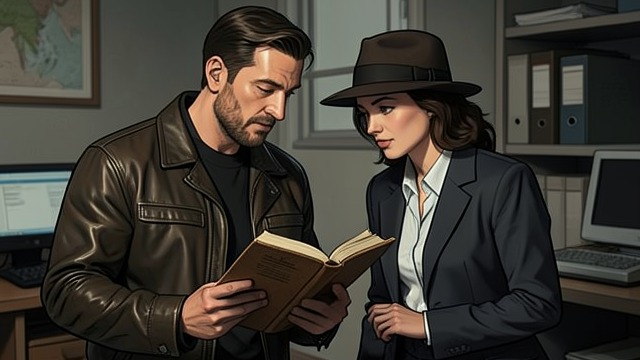
The Assignment
A Fragment Without an Ending
Peter Katz tells John Keller about the manuscript Richard Flynn submitted shortly before his death. The surviving excerpt ends as Flynn sets out for Joseph Wieder’s house on the night of the murder, leaving Keller with a possible confession but no conclusion.
Commercial Stakes and Uncertainty
Peter asks Keller to investigate the case and, if necessary, help reconstruct a publishable account. Keller accepts while recognizing that he may be building a book from a partial narrative, old records, and people whose memories have had decades to change.
The assignment gives an unfinished private story a new public purpose. Keller’s first conflict is methodological: he must distinguish what can be corroborated from what Flynn might have imagined or misremembered.
The First Interview Contradicts Flynn
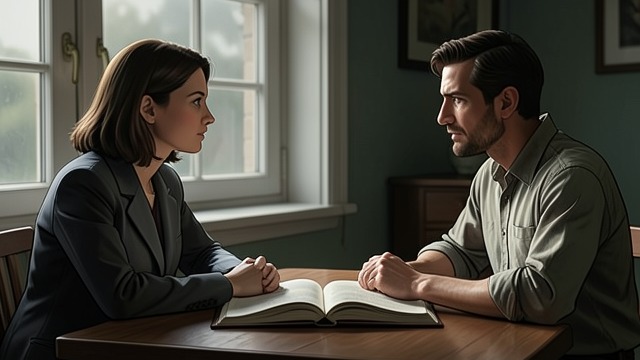
Laura’s Counter-Narrative
A Meeting at Columbia
Keller locates Laura Baines, now Laura Westlake, and gives her a copy of Flynn’s excerpt in exchange for a conversation. She says she was never Flynn’s lover, describes him as persistently obsessive, and denies being at Joseph Wieder’s residence on the murder night.
The Source Problem
Laura’s account reverses key elements of Flynn’s story, particularly who pursued whom and whether she had a romantic connection to Wieder. Keller senses that she is guarded, but his impressions cannot establish that she is lying.
The interview changes the investigation from a search for a missing ending into a contest between incompatible personal histories. Keller must decide whether apparent confidence is evidence of truth or simply another form of control.
An Old Witness Names Richard
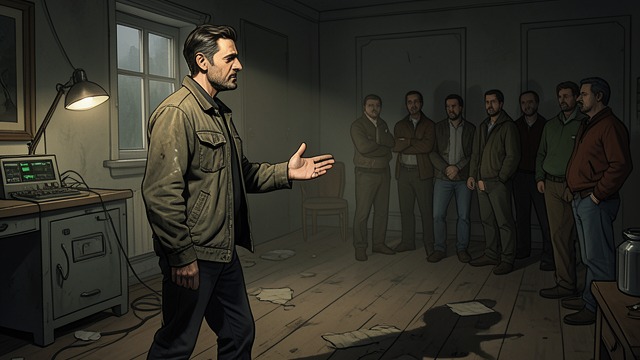
Derek’s Accusation
A Recovered Scene
Keller pays Derek Simmons to discuss the old case. Derek says he watched Richard Flynn, Laura Baines, and Joseph Wieder arguing at the house, and claims that Richard killed Wieder while Laura witnessed or assisted the crime.
Confidence Without Corroboration
Derek describes the scene in detail and says that the police once heard the same account from him. Keller is struck by the force of his conviction, but Derek’s history of amnesia makes his testimony especially difficult to assess.
The accusation appears to give Keller a culprit and a motive, yet it depends on a single witness whose past and memory are already central to the case. Rather than ending uncertainty, it gives the investigation another version to test.
Sarah’s Theory of Ambition
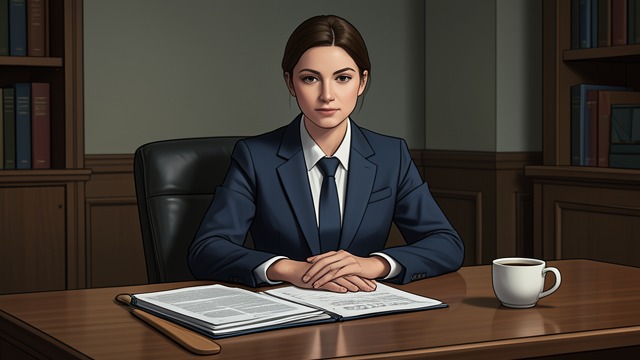
A Motive for the Missing Book
The Authorship Dispute
Sarah Harper tells Keller that Laura believed she deserved co-author credit for Joseph Wieder’s work. She says Laura found a proposal without her name and began treating the conflict as a personal battle.
A Theory of Manipulation
Sarah alleges that Laura misled Wieder about Richard Flynn’s feelings, encouraged jealousy, and later asked Sarah to provide a false alibi. She also believes Laura’s later book was based on the professor’s stolen work and sends Keller a copy that resembles the proposal’s first chapter.
The account brings a plausible career motive into focus, but it also comes from a former friend who has her own history of distress and estrangement. Keller recognizes that the theory may connect separate facts without proving that Laura arranged or committed a murder.
A Theory Set Aside
No Publishable Verdict
Evidence Without Proof
Keller compares the proposal with Laura Westlake’s book and sees a strong textual resemblance. Still, that resemblance cannot establish who originated the work, whether Laura stole it, or whether the manuscript dispute led to Joseph Wieder’s death.
The Decision to Stop
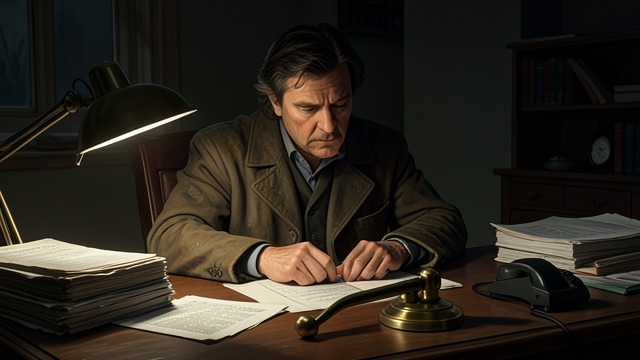
Keller breaks up with Sam during the investigation and loses the personal energy that had sustained his work. He gives Peter a summary, keeps no claim to a definitive solution, and puts the accumulated documents away after accepting that a legally vulnerable accusation would not make a reliable book.
His withdrawal is not a discovery that the case is solved. It is a recognition that evidence, inference, and narrative have become entangled, while the missing manuscript and conflicting witnesses prevent a confident conclusion.
March 2007
Early in Keller’s investigation, 2007
Shortly after Keller meets Laura Westlake
After Keller begins interviewing former Princeton associates
At the end of Keller’s initial investigation
